
Rabbi Yoshi is currently in Poland leading the 40 person Stephen Wise Temple delegation on the March of the Living. This Shabbat he shares some reflections from their visit to Auschwitz.
On the morning of Yom HaShoah, this past Wednesday, we visited the Kraków Ghetto. Then we walked to the factories just across the river, where Jews were marched each day as slave laborers, including the factory of Oskar Schindler.
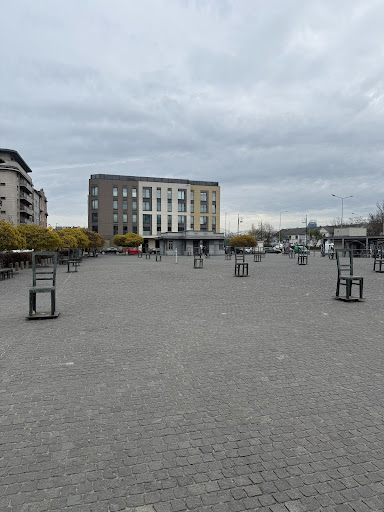
Jewish Ghetto Memorial
From there, we boarded our buses and drove to Auschwitz.
We walked beneath the infamous sign: Arbeit macht frei.
Forty of us, representing Stephen Wise Temple.
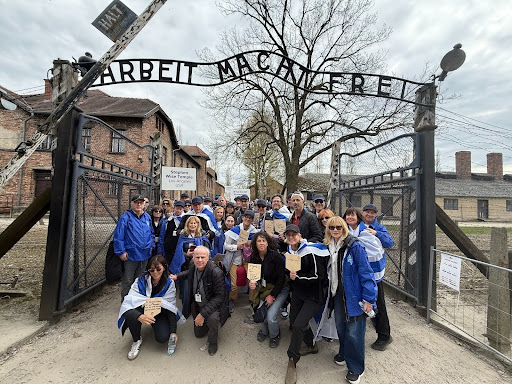 Then we marched on, 1.5 kilometers, to Auschwitz II-Birkenau.
As we passed through the main gate, each of us gently placed a small sign bearing the name of someone we were remembering on the train tracks.
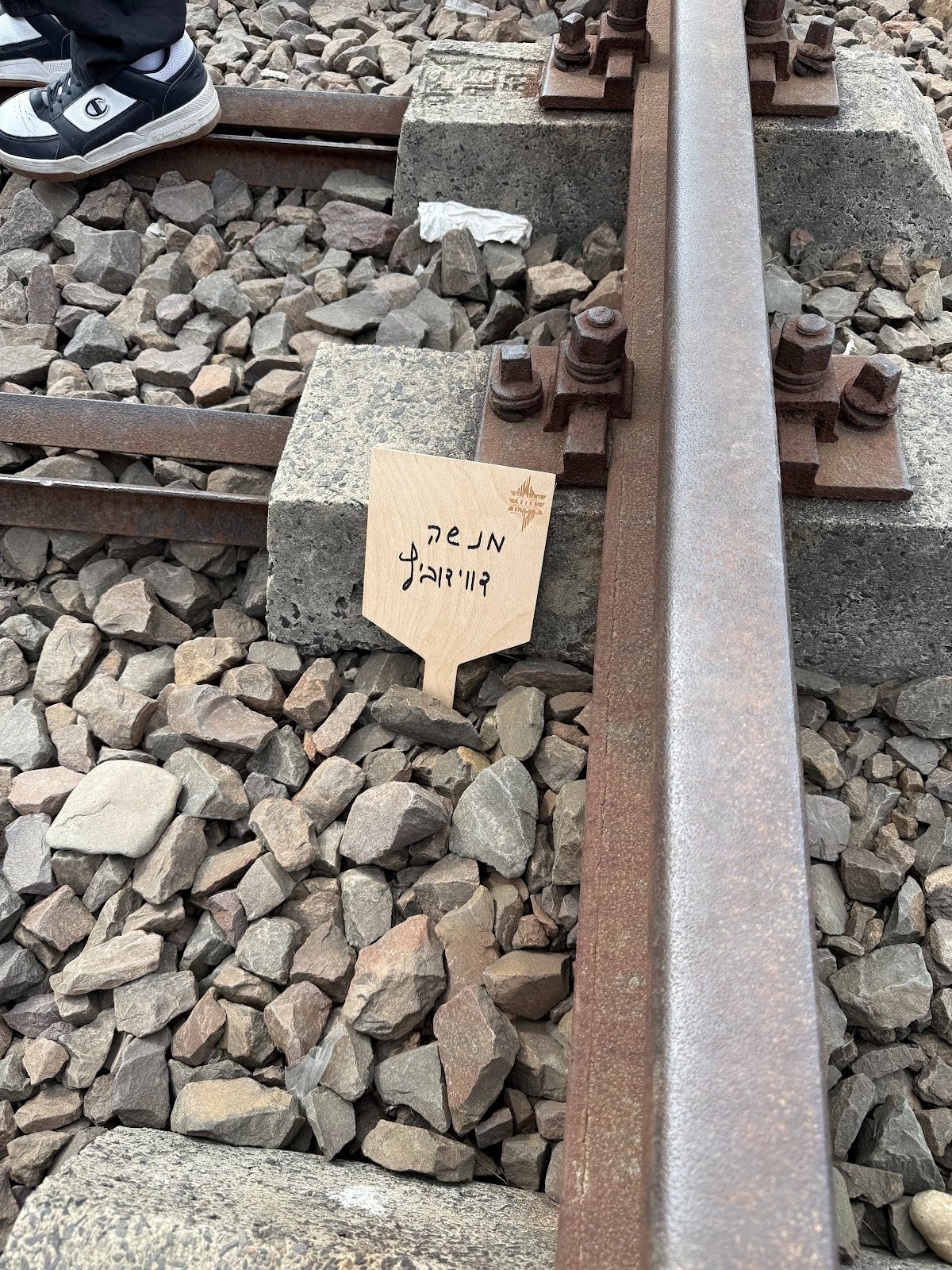 On my sign was the name Mnashe Davidovits, my cousin.
He was deported with his family from their little town in Hungary to Auschwitz on June 6, 1944. D-Day.
His mother, his brother, and his four sisters were sent to the right. Directly to the gas chambers.
Mnashe was sent to the left. To work. To another chance. Ultimately, to life.
Two weeks later, he was transferred to Dachau, where he remained until April of the following year, when he was finally liberated by the American army.
As I continued walking toward the ceremony, held on a large plaza near where the gas chambers once stood, the past gave way to present day.
I saw a large group of IDF soldiers gathered beside a cattle car, listening to the story of Tova Friedman, an Auschwitz survivor. I came near and listened. I noticed a man taking a video of her on his iPhone — and then I recognized him. It was Omri Miran, the last hostage to return home alive from Gaza, on October 13, 2025, after 738 days in captivity.
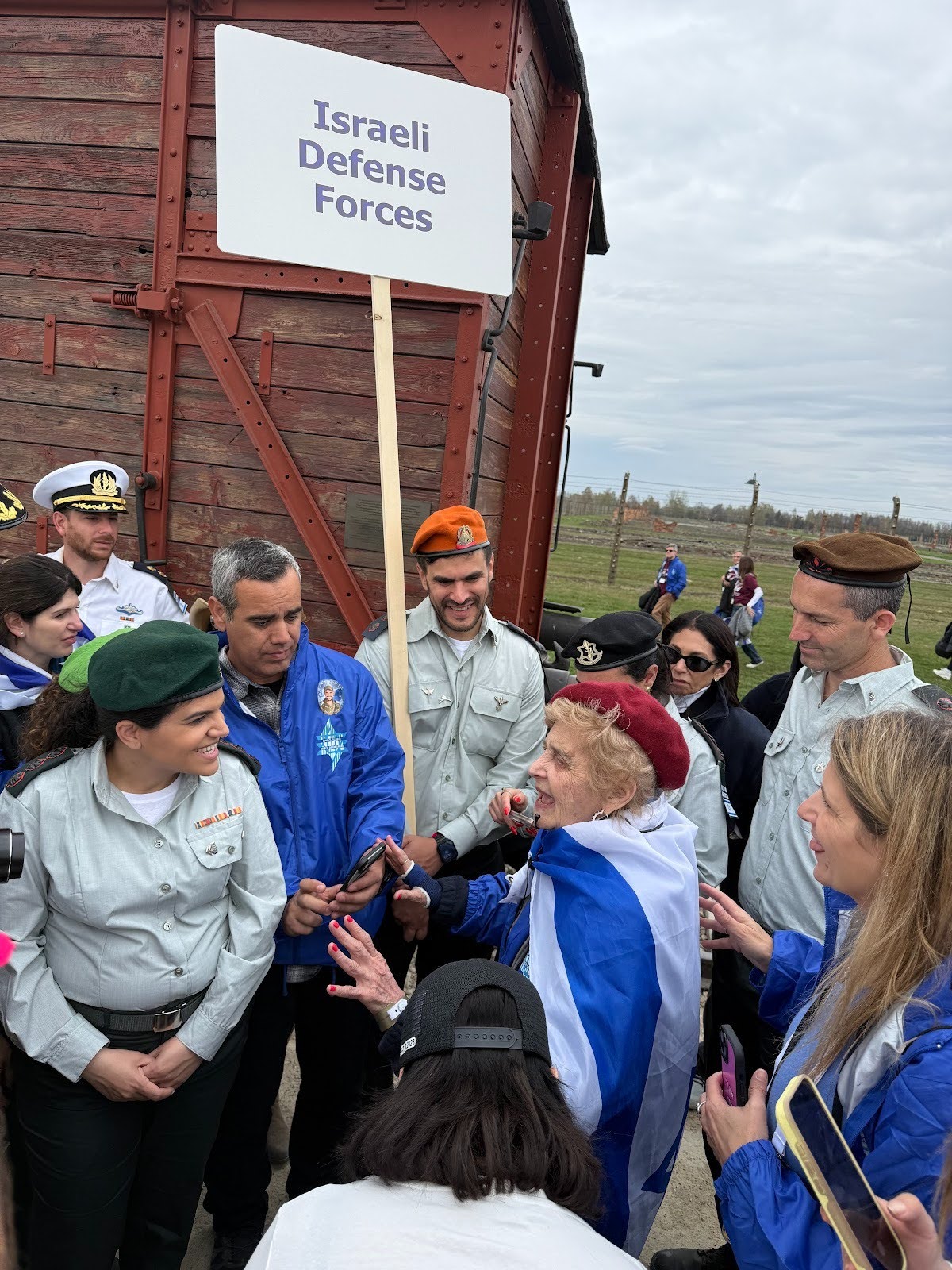 I couldn’t believe what I was seeing — watching him watching her. When she finished, Omri embraced her.
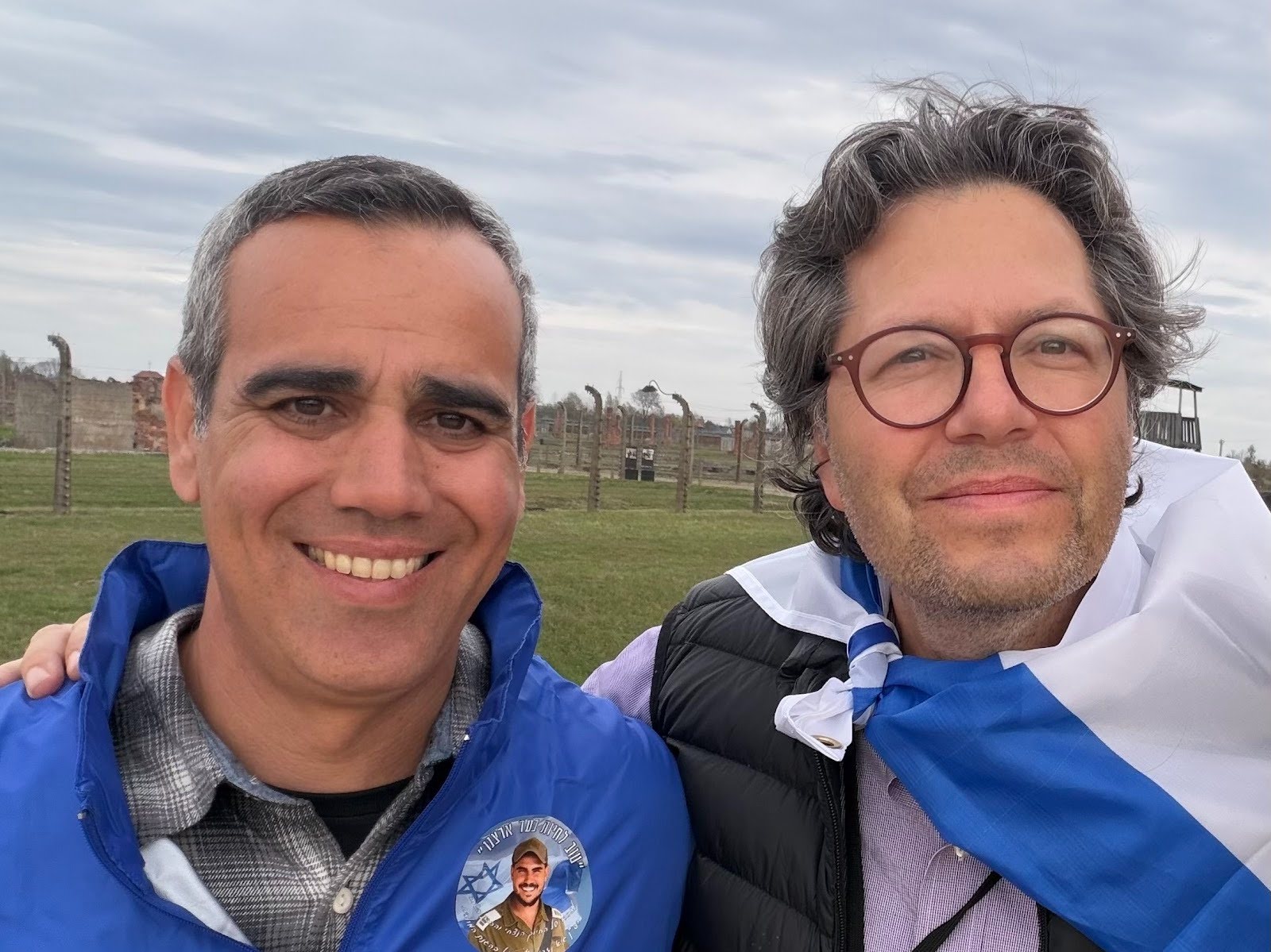
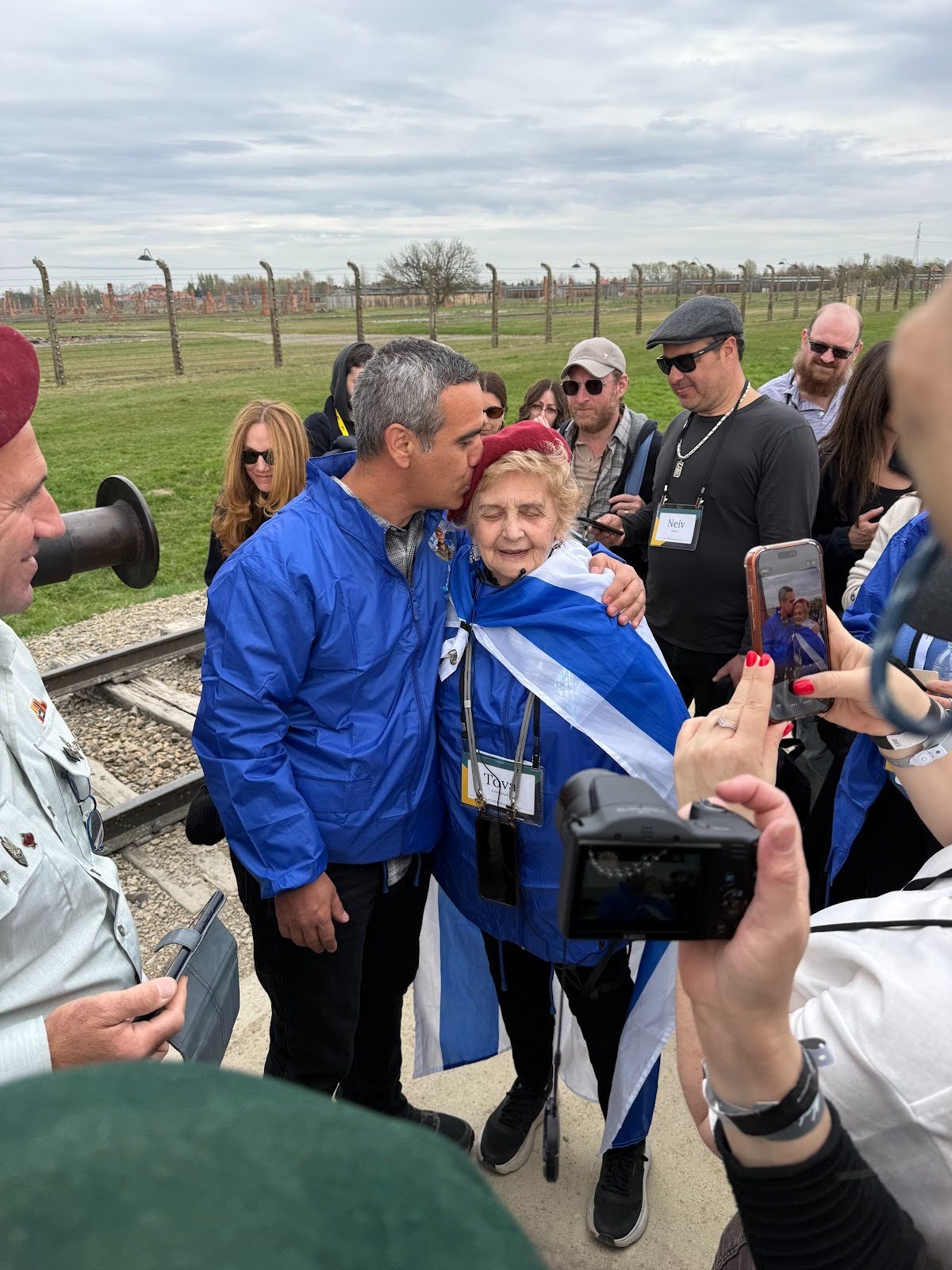 Then I approached him and told him how moving it was to see him there. I shared that our congregation, far away in Los Angeles, had prayed for him and for all the hostages and their families every day.
I asked if I could take a photo with him and he agreed. He continued on with his March of the Living handler, and I went back to find our group.
 And then, about fifteen minutes later outside the porta potties, looking for a place to wash my hands — I saw him again. Standing alone. Without a word, he reached into his pocket, pulled out a small bottle of hand sanitizer, and gave me a spritz.
At Auschwitz, on Yom HaShoah, this extraordinary man — who had just survived 738 days of captivity, a time when basic hygiene was a luxury he was rarely granted — was offering me something to cleanse my hands. I didn’t have words for what that meant. I still don’t.
So, I simply thanked him.
And he said: “Thank you. And thank your congregation for praying for me.”
And in that moment, it all came together.
Memory of the past. The six million. Stories, families, entire worlds destroyed. We carry them with us, not as artifacts of the past but as a charge for the present.
The urgency of this moment. The past teaches us not to stand by, not to look away, but to cry out and to act.
And gratitude for what we still have. The ability to come home. The gift of life itself — another moment, another day. Omri Miran knows what that means better than any of us. And standing there beside him, at Auschwitz, on Yom HaShoah, for a moment, so did I.
We remember. We mourn. We give thanks.
And then we act — holding fast to the belief that somehow, love will triumph over hatred, hope over despair, and light will push back the darkness.
Shabbat Shalom,

Rabbi Yoshi