
Recently, I purchased a Google Hub for our kitchen. The speaker is pretty good and it’s nice to be able to simply call out a request and have music fill the room (“Hey Google, play Hanan ben Ari” is a familiar refrain in our house). But the feature I’ve come to love most is the photos. The screen cycles through images from my library, and every so often one appears that pulls me back in time.
One surfaced the other day from May of 2020—a picture of me delivering a “baby Torah” to one of our kindergarten students. That year, because of public health regulations, we couldn’t gather in person for Consecration. So, we improvised. If the children and their families couldn’t come to us, we would go to them. We brought Torah scrolls and certificates bearing each child’s Hebrew name to backyards and driveways, masked and standing at a careful distance.
Oy, what a time.
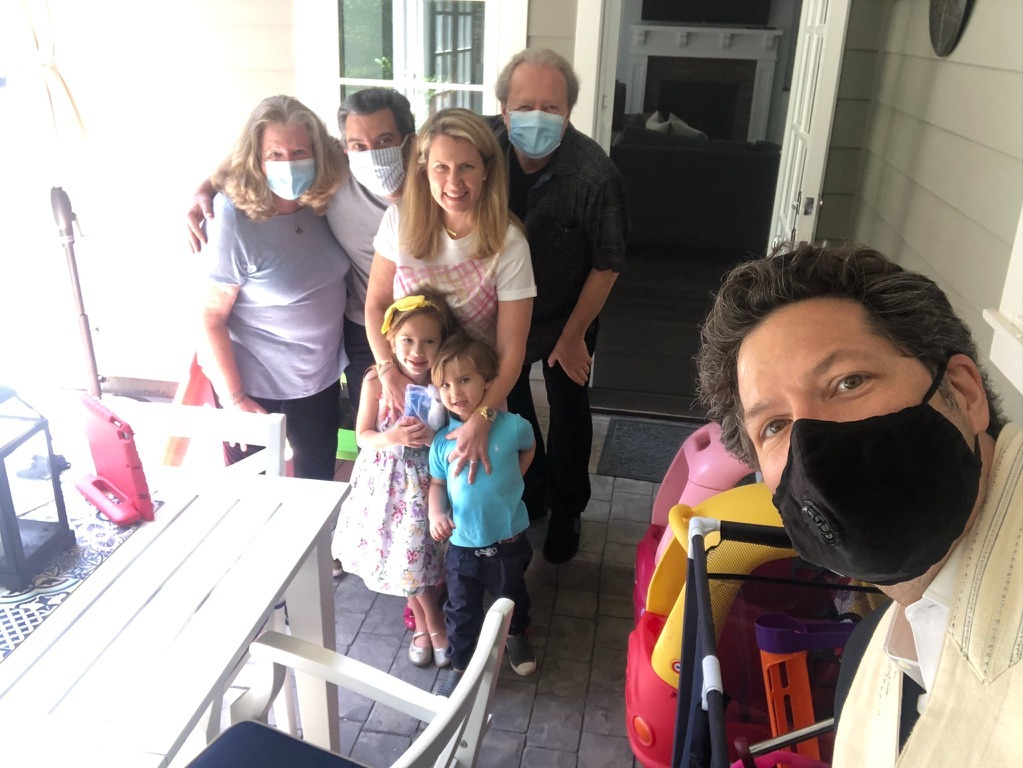
Seeing that photo reminded me just how much we missed one another during those difficult months. How deeply we longed for human connection. How even brief encounters—a few words, a shared ritual, a moment of eye contact—carried so much meaning.
In the years since, there has been growing awareness of loneliness and its effects on our lives and communities. What many of us felt then has become clearer now: isolation leaves a mark. And all of it echoes a truth our tradition articulated long ago:
לֹא־טוֹב הֱיוֹת הָאָדָם לְבַדּוֹ
It is not good for a person to be alone. (Genesis 2:18)
We are not meant to go through life by ourselves. We need community. And not only community in name, but an active community, one that pays attention—and notices who is nearby. This week’s Torah portion offers a striking image of what that kind of community looks like.
As the Israelites prepare for their very first Passover, standing on the threshold of freedom, they are instructed:
וְאִם־יִמְעַט הַבַּיִת מִהְיוֹת מִשֶּׂה וְלָקַח הוּא וּשְׁכֵנוֹ הַקָּרֹב אֶל־בֵּיתוֹ בְּמִכְסַת נְפָשֹׁת אִישׁ לְפִי אׇכְלוֹ תָּכֹסּוּ עַל־הַשֶּׂה׃
If a household is too small for a lamb, let it share one with a nearby neighbor, according to the number of people; each household contributing based on what they will eat. (Exodus 12:4)
At first glance, this sounds like practical advice. A lamb is too much for one small household. But the Torah is doing something deeper here.
The instruction assumes awareness. The Torah does not wait for the smaller household to ask. The responsibility lies with the neighbor—to look around and notice who might have too little. Not only too little food, but too little companionship.
It also recognizes that sacred moments are often too heavy to carry alone. In Jewish life, holiness is rarely solitary. Whether joy or sorrow, celebration or transition, our most meaningful experiences are meant to be shared.
And the Torah insists that the accounting be done carefully, by number of souls—בְּמִכְסַת נְפָשֹׁת. Everyone counts. Everyone matters. My neighbor’s experience is bound up with my own.
The “lamb” today may look different. It might be a Shabbat table, a phone call, a simple “I am thinking about you” text message, an invitation, or simply showing up. The Torah’s vision of liberation begins not with a solitary journey, but with an act of inclusion. Closeness creates responsibility.
As we think about the kind of community we want to build, this ancient teaching asks something very real of us. Can we find ways to share more freely? Can we be there for one another not only in moments of crisis, but in ordinary times? Can we open our hearts a little more to those in our own community and those beyond our walls? Can we remain open and empathetic to others, as we navigate our collective challenges and joys? Can we be kind and loving to the stranger as our Torah commands?
May this Shabbat remind us to notice one another—and to draw closer.
Shabbat Shalom,

Rabbi Yoshi