
This week’s Torah portion begins with an instruction. While given specifically to Aaron as the High Priest, I think these words are meant for all of us and especially our leaders. We read:
“Speak to Aaron and say to him, ‘When you cause the light to go up, let the seven lamps give light at the front of the lampstand.’” (Numbers 8:1-2)
וַיְדַבֵּ֥ר יְהֹוָ֖ה אֶל־מֹשֶׁ֥ה לֵּאמֹֽר׃ דַּבֵּר֙ אֶֽל־אַהֲרֹ֔ן וְאָמַרְתָּ֖ אֵלָ֑יו בְּהַעֲלֹֽתְךָ֙ אֶת־הַנֵּרֹ֔ת אֶל־מוּל֙ פְּנֵ֣י הַמְּנוֹרָ֔ה יָאִ֖ירוּ שִׁבְעַ֥ת הַנֵּרֽוֹת׃
The Torah’s instruction to Aaron is precise. The word here is not the same as the one we use each Shabbat when we light our candles; it does not say l’hadlik. Aaron is not simply asked to kindle the lamps. Rather, the word is b’ha’alot’cha — when you cause the light to ascend, to go up. The purpose of the flame is not merely illumination. It is elevation. Our task as Jews — as a people, as a nation, and as individuals — is to bring more light into the world and cause that light to rise, to inspire, to uplift.
This week I want to speak about something difficult. I do so not to add to the overwhelming noise around Israel, and not because I think the relentless criticism Israel faces is fair or accurate. On the contrary. But Israel is a real country with real challenges, just like any other country on the planet. Its leaders are imperfect, like all of us, and some of what has happened in recent weeks has pained me. As a Zionist — someone who loves Israel not only as it is, but even more the moral and spiritual promise of what it can still become — I do not believe silence is an option when that collective light begins to dim.
So I want to name three moments in which I believe we have diminished that light. Three moments that ask us not to abandon Zionism, but to live up to it more fully.
First: settler violence in the West Bank. This is not new, but it has intensified. President Isaac Herzog, speaking at the Jerusalem Unity Prize ceremony this Sunday, condemned “a wave of terrible violence carried out by an anarchist mob,” calling these acts ones that “defile and violate every basic moral, legal, and Jewish norm.” He warned of a “terrible process of brutalization” creeping in from the margins — one that “threatens to enter the mainstream” of Israeli society.
That the President spoke these words publicly, at a ceremony celebrating Jewish unity, is the mark of a healthy democracy. I am grateful for his leadership and moral resolve. And I want to add my voice: lawlessness in the West Bank, by anyone, is a chillul Hashem, a desecration of God’s expectations for us. It diminishes the light.
Second: National Security Minister Itamar Ben Gvir filmed himself taunting activists detained from the Global Sumud Flotilla and posted the footage to social media. Foreign Minister Gideon Sa’ar rebuked him sharply: “You deliberately caused damage to the state with this disgraceful performance, and not for the first time.” US Ambassador Huckabee said Ben Gvir had “betrayed the dignity of his nation.”
I understand the strong feelings many of us have about publicity stunts like the flotilla, crewed in no small part by agitators and propagandists who seem more interested in harming Israel than helping Palestinians. But the rule of law, and the basic dignity owed to every person in custody, are not optional. Not even now. Not even for those who hate us. Ben Gvir’s childish stunt handed our enemies exactly what they wanted. Prime Minister Netanyahu chose to include him in his government. He must hold him accountable. It diminishes the light.
Third: Social Equality Minister May Golan stood at the Knesset podium last week and told Reform rabbi and MK Gilad Kariv that he was “marrying dogs in your delusional synagogues.” Israel’s Ambassador to the US, Yechiel Leiter, himself an Orthodox Jew, called her remarks “disgusting and reprehensible,” writing: “There is a line that cannot be crossed.” I agree entirely. To have a sitting minister speak this way about liberal Judaism while we pour our hearts into advocating for Israel is a betrayal of the covenant between Israel and diaspora Jewry. It diminishes the light.
I had the privilege of meeting with Ambassador Leiter in New York yesterday and raised these concerns directly. I also thanked him for speaking out so forcefully and unequivocally. That’s what real leadership looks like.
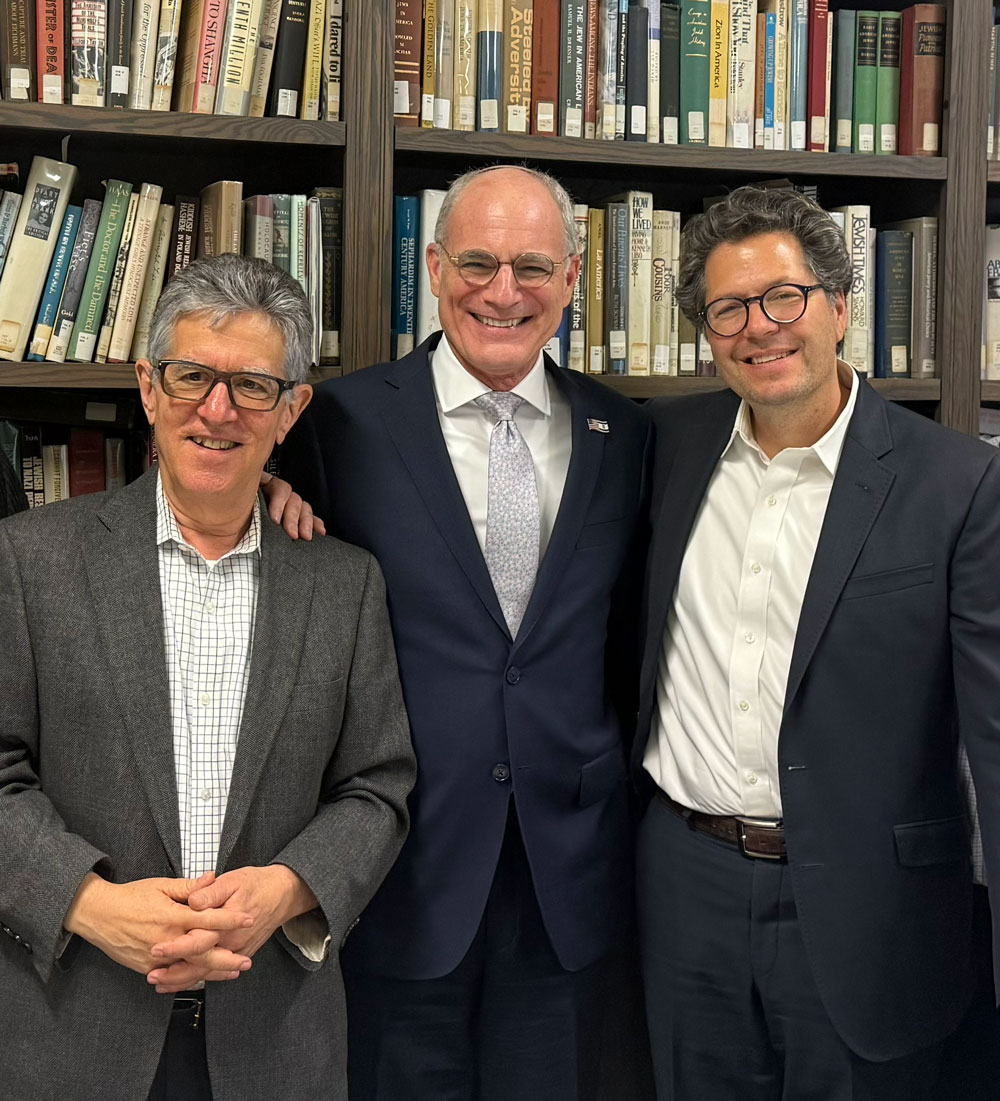
Rabbi Yoshi, Ambassador Yechiel Leiter, and Rabbi Ammiel Hirsch at the Re-CHARGING Reform Judaism conference yesterday in New York.
At the same time as we advocate publicly and proudly for Israel here in the United States, I left my meeting with the Ambassador feeling all the more strongly that true advocacy sometimes requires tochecha — loving critique, offered from within the family. I encourage you to make your voice heard. Reach out to the Israeli Ambassador’s office in Washington or the Consul General here in Los Angeles. Do so with love, as proud Zionists, as Jews who embrace values like egalitarianism, LGBTQ+ inclusion, and Tikkun Olam. Speak not out of rejection, but out of love — because believing in Israel, and loving Israel, also means believing it can, and must, live up to the Jewish values we hold sacred.
B’ha’alot’cha teaches us that every action either elevates the flame or dims it. Our task — as Jews, as Zionists, as lovers of Israel — is always to bring more light. This is not a new calling. At Sinai, we were commanded:
“You shall be for Me a kingdom of priests and a holy nation.” (Exodus 19:6)
וְאַתֶּם תִּהְיוּ לִי מַמְלֶכֶת כֹּהֲנִים וְגוֹי קָדוֹשׁ.
That is who we are called to be. And when we fall short — as individuals, as a people, whether everyday Jews or the Prime Minister himself — we must have the courage to face it honestly, call it what it is, and do better. That is how we raise the light.
Shabbat Shalom,

Rabbi Yoshi